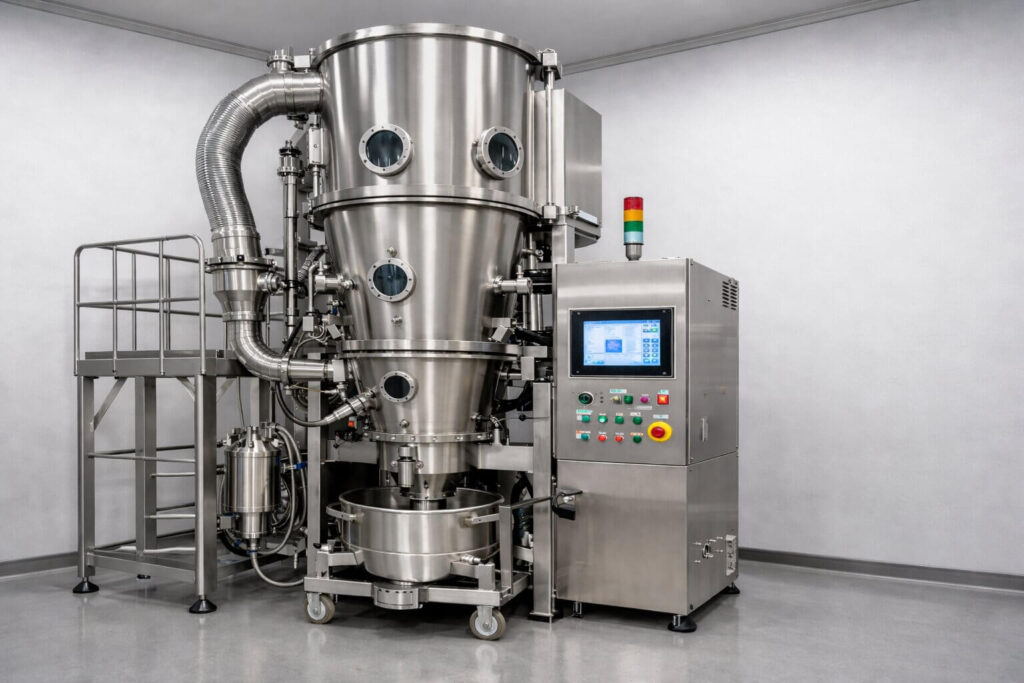
Fluid-bed processing such as tablet coating or granulation is widely used in pharmaceutical industry as it delivers fast, uniform, and highly controllable results. The process improves product stability, shelf life, taste, odor, and dust control, while also enabling targeted or modified release profiles.
What makes fluid-bed coating so effective is the use of large volumes of fluidizing air. As the coating is applied, this air dries the film almost instantly, allowing rapid and efficient coating without overwetting the product. That speed, however, also makes the process extremely sensitive to air temperature and humidity.
Understanding Equilibrium Relative Humidity
At the heart of humidity control in solid dosage manufacturing is water activity, often expressed as aw.
Water activity is a better indicator of product stability than total moisture content. It governs chemical stability, physical integrity, microbial safety, and shelf life. It also affects powder flow, compaction, tablet hardness, and dissolution rate.
Water in solids exists in two forms. Free water is loosely bound and behaves much like bulk water. Bound water is tightly attached to the material and is far less reactive. From a stability standpoint, free water is what matters. Total moisture content alone doesn’t tell the full story.
Relative humidity in the processing environment directly influences free water levels. During tablet coating, air that is too dry can pull moisture out of the product, while air that is too humid can cause overwetting. Operating at the Equilibrium Relative Humidity, or ERH, allows the material to neither gain nor lose moisture. This reduces rejects, improves consistency, and extends shelf life.
At equilibrium, the water activity of a material matches the surrounding relative humidity. For example, storage at 25 percent RH will drive materials toward a water activity of 0.25, even though their final moisture contents may differ. When materials with different water activities are mixed, moisture redistributes until equilibrium is reached. This is why measuring water activity provides deeper insight than measuring moisture content alone, especially for formulation and packaging decisions.
The relationship between water content and water activity is complex and non-linear. Small changes in moisture can cause large shifts in water activity, particularly at low moisture levels. Measuring water content accurately at these levels requires highly sensitive instruments, and even then, it may not reflect true stability risk. Monitoring water activity is therefore critical in processes with tight quality requirements.
Impact on Product Stability
Water activity has a major influence on the stability of proteins, enzymes, and biopharmaceuticals. Maintaining the correct water activity helps preserve their structure and effectiveness.
In powders, water activity affects flowability, caking, compaction, and mechanical strength. It is also essential for evaluating shelf-life expectations and selecting appropriate packaging materials.
Air Handling Requirements for Fluid-Bed Systems
Process air for fluid-bed equipment must meet strict temperature and humidity conditions based on the product and the solvents used. Typically, outside air is fully treated through filtration, cooling, dehumidification, heating, and humidification. Because this air is not recirculated, energy consumption is high, making efficient system design essential.
While fluid-bed equipment suppliers often offer integrated air systems, air treatment is best handled by specialised HVAC and humidification companies. This approach improves reliability, reduces energy consumption, and ensures compliance with cGMP standards.
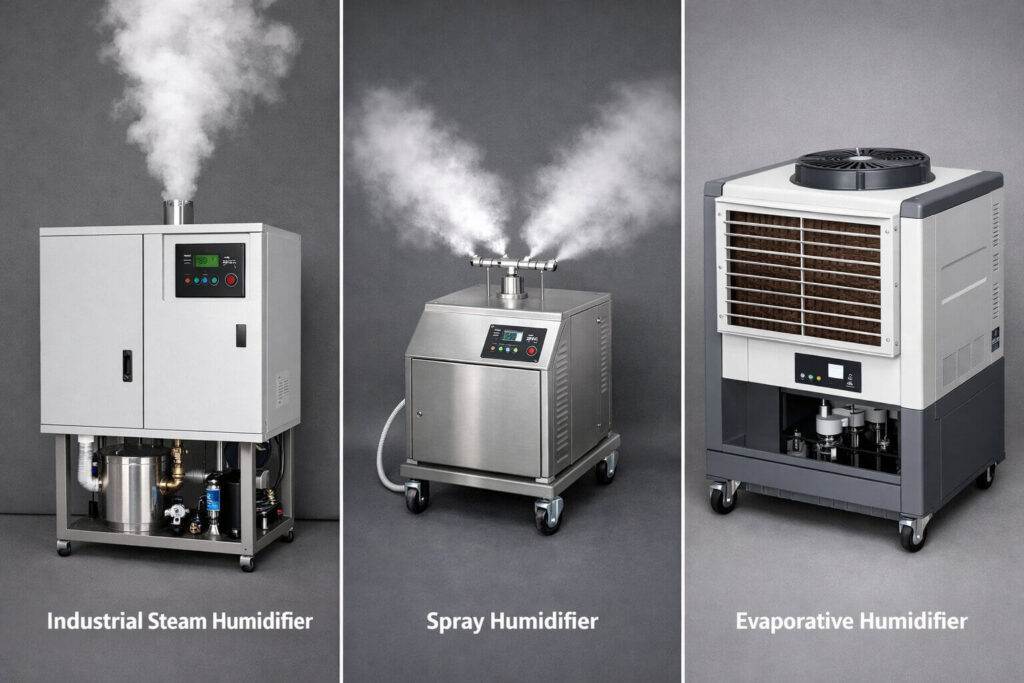
The World Health Organization mandates steam humidifiers in pharmaceutical applications to eliminate contamination risks associated with cold water systems. These systems must be designed with proper condensate removal. Chilled water coils require effective drainage to prevent microbial growth.
For applications requiring sub-zero dew points, desiccant dehumidifiers installed at the AHU inlet provide better moisture control and reduce contamination risk. Silica gel rotors with bacteriostatic properties and washable construction are generally preferred.
Energy Saving Opportunities
1. Dehumidification
Energy-efficient dehumidification can deliver meaningful savings. Studies have shown that under specific operating conditions, a 3000 CMH air handling system can save up to 8.3 kW through optimized dehumidification design.
2. Humidification
WHO guidelines now mandate steam injection for humidification in pharmaceutical environments, replacing older ultrasonic or cold water systems. Steam generation consumes more energy, but correct drainage, insulation, and system layout are essential to maintain hygiene and efficiency.
Electric steam humidifiers are suitable for smaller loads up to around 80 kg per hour, with an energy requirement of 0.75 kW per kilogram of steam generated. Resistive steam humidifiers offer tighter control and are often chosen for critical processes. Larger installations may require steam capacities exceeding 100 kg per hour. The cost of generating boiler steam is usually lower than that for electricity. Due to risk of contamination boiler steam cannot be used for humidification directly. Steam exchange humidifiers are used to generate clean steam using boiler steam as energy source. Clean steam is generated at atmospheric pressure. Actual energy savings depend on operating hours and electricity costs, but proper system selection can significantly reduce long-term expenses.